
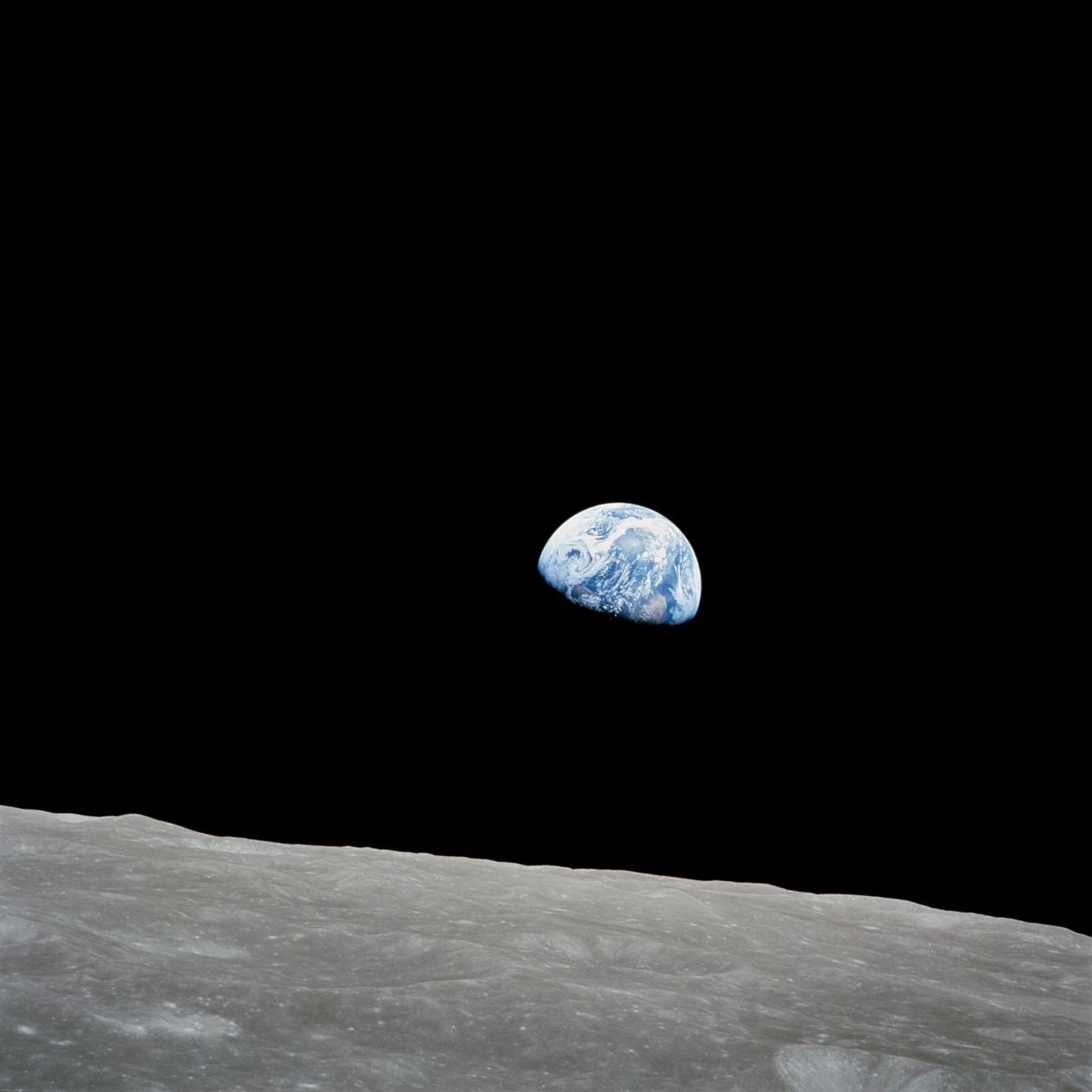
Earth rising above the lunar horizon, photographed from Apollo 8 in 1968

COSMOS AI / Space & Astronomy Department

Careers
in Space

Your future is out there.

Discover the people, pathways and possibilities shaping tomorrow's space industry.

A new perspective on your possibilities.Earthrise, Apollo 8 · NASA/JSC

01 / A wider world of possibility

Space is more than a destination.
It's a career.

You don't have to leave Earth to help explore what's beyond it.

Behind every mission are researchers, engineers, analysts, scientists, communicators, entrepreneurs and policy specialists. Different skills. A shared curiosity.

Careers in Space is a COSMOS AI initiative from the Space & Astronomy Department, helping students, early-career researchers and curious learners discover where they could belong.

Science.Engineering.Technology.People.

An optional guide / A place to begin

Find your place in space.

Explore where your interests could take you.

Start with what interests you.

The optional three-question guide becomes available when this page finishes loading. You can explore every pathway below without JavaScript.

Browse all nine paths

02 / Find your direction

One universe.
So many ways in.

Start with what fascinates you.
There's more than one path to space.

01

Understand the universe

Astrophysics & Astronomy

Ask the big questions. Study stars, galaxies and the physics behind what we see in the night sky.

Explore this path

What this field involves

Astrophysics uses physical principles and observations to investigate objects and processes beyond Earth. Astronomy includes collecting and interpreting light across the electromagnetic spectrum; many roles combine research, instrumentation and computing.

What professionals do

  • Compare observations with physical models of stars or galaxies.
  • Calibrate instruments, analyse uncertainty and communicate research findings.

Skills to explore

Physics · Mathematics · Scientific computing

Learning directions, not formal entry or employment requirements.

Start with curiosity

Compare images of the same galaxy at different wavelengths. What does each view reveal?

Keep exploring

02

Build what comes next

Aerospace Engineering

Turn ambitious ideas into spacecraft, instruments and the systems that help a mission leave the ground.

Explore this path

What this field involves

Aerospace engineers develop vehicles and systems for flight in air and space. Space projects bring together structures, propulsion, thermal control, electronics and systems engineering, with extensive testing before launch.

What professionals do

  • Evaluate design trade-offs such as mass, power and reliability.
  • Model how a component behaves and compare the prediction with test results.

Skills to explore

Mechanics · Design · Systems thinking

Learning directions, not formal entry or employment requirements.

Start with curiosity

Sketch a small science mission. Identify its power, communications and thermal-control needs.

Keep exploring

03

Connect our world

Satellite Technology

Design and operate the technology in orbit that enables communication, navigation and discovery.

Explore this path

What this field involves

Satellite teams design, integrate and operate spacecraft that support science and everyday services. Work spans the satellite platform, its instruments or communications payload, and the ground systems used to command it and receive data.

What professionals do

  • Plan communication links and power needs for a satellite mission.
  • Monitor telemetry, test subsystems and investigate changes in spacecraft behaviour.

Skills to explore

Electronics · Communications · Orbital mechanics

Learning directions, not formal entry or employment requirements.

Start with curiosity

List three everyday uses of satellites. Pick one and sketch what information must travel between Earth and space.

Keep exploring

04

See Earth differently

Remote Sensing & GIS

Read our changing planet from above. Translate satellite observations into insight for life on Earth.

Explore this path

What this field involves

Remote sensing measures Earth without direct contact, often using instruments on satellites. Geographic information systems help organise and compare those observations with other spatial data, while keeping resolution, uncertainty and context in view.

What professionals do

  • Map land cover or compare observations of a flood or coastline over time.
  • Check data quality and explain what an image can and cannot establish.

Skills to explore

Geography · Data analysis · Spatial reasoning

Learning directions, not formal entry or employment requirements.

Start with curiosity

Use public Earth imagery to compare a coastline or city over time. Separate visible change from its possible causes.

Keep exploring

05

Find patterns. Create possibilities.

Artificial Intelligence in Space

Bring computing to cosmic questions, from analysing telescope observations to supporting autonomous systems.

Explore this path

What this field involves

Space researchers use machine learning to look for patterns in observations and support selected automation tasks. Useful models need appropriate training data, careful evaluation and human oversight; coding and statistics are foundations to explore before specialised AI methods.

What professionals do

  • Develop and evaluate a classifier for astronomical images.
  • Examine errors, dataset bias and whether a model generalises to new observations.

Skills to explore

Programming · Statistics · Responsible machine learning

Learning directions, not formal entry or employment requirements.

Start with curiosity

Look at a few galaxy images in Galaxy Zoo. Describe the shapes you notice, then compare how people and computers might sort them.

Keep exploring

06

Shape a shared future

Space Policy & International Cooperation

Help people work together beyond borders. Explore the rules, institutions and decisions shaping space activity.

Explore this path

What this field involves

Space policy brings law, public policy and international cooperation into decisions about space activity. Professionals examine responsibilities, sustainability and access, working with scientific and technical specialists rather than needing to build spacecraft themselves.

What professionals do

  • Research how international agreements relate to a proposed space activity.
  • Compare policy options and help different institutions communicate and collaborate.

Skills to explore

Research · Communication · Law and policy

Learning directions, not formal entry or employment requirements.

Start with curiosity

Read the introductory note on the Outer Space Treaty. Write one question about how countries could share responsibility on the Moon.

Keep exploring

07

Make discovery accessible

Space Education & Science Communication

Help people understand space through clear explanations, teaching and stories grounded in evidence.

Explore this path

What this field involves

Science communicators and educators translate research into understandable learning experiences. They check sources, adapt explanations to different audiences and make uncertainty visible.

What professionals do

  • Develop lessons, articles or public activities with scientists.
  • Check claims, credit images and listen to audience questions.

Skills to explore

Writing · Listening · Visual explanation · Fact checking

Learning directions, not formal entry or employment requirements.

Start with curiosity

Choose one NASA discovery. Explain it in 100 words for a younger learner and include its source.

Keep exploring

08

Explore other worlds

Planetary Science

Investigate planets, moons and small bodies to understand how worlds form and change.

Explore this path

What this field involves

Planetary scientists compare surfaces, interiors, atmospheres and histories of worlds. They combine spacecraft observations, laboratory experiments and models; an image alone cannot establish every cause.

What professionals do

  • Compare geological features and measurements from planetary missions.
  • Test explanations for how a surface or atmosphere has changed.

Skills to explore

Observation · Geology · Physics · Comparing evidence

Learning directions, not formal entry or employment requirements.

Start with curiosity

Compare NASA images of two planetary surfaces. List visible similarities and differences without assuming their causes.

Keep exploring

09

Turn light into evidence

Observatories & Telescope Operations

Help telescopes and their instruments collect reliable observations, on Earth and in space.

Explore this path

What this field involves

Observatory teams plan observations, operate instruments and check the quality of collected light and data. ESASky is an archive exploration tool, not a remote telescope control system or operations certification.

What professionals do

  • Schedule observations with instrument and environmental constraints.
  • Calibrate instruments and check observation quality with researchers.

Skills to explore

Instrument care · Planning · Data quality · Teamwork

Learning directions, not formal entry or employment requirements.

Start with curiosity

Explore one object in the ESASky learning guide. Compare two wavelengths and record which instrument made each image.

Keep exploring

These are starting points for exploration, not entry requirements or promises of employment.

03 / The people behind the possibilities

Learn from those
who work among
the stars.

The work. The turning points. The questions they wish they'd asked sooner.

Careers in Space features recorded professional interviews, with no live audience during recording. Discover new episodes as they are released.

A conversation worth waiting for

Our first conversations are coming soon

Real experiences. Honest advice. A closer look at the work behind the wonder.

Guest announcements will appear here once confirmed.
Not just a job title. A whole new perspective.Curiosity is a good place to start.

04 / Upcoming episodes

New episodes on the horizon

No episodes or release dates have been announced yet. Follow COSMOS AI for confirmed guest details and new recorded interviews.

Follow COSMOS AI on LinkedIn

05 / A little curiosity goes a long way

From a question
to a possibility.

  1. 01

    Explore a career.

    Find a field that connects with your curiosity.

  2. 02

    Meet a professional.

    Discover the people and perspectives behind the work.

  3. 03

    Watch the conversations.

    Explore real career journeys in recorded professional interviews.

  4. 04

    Discover your next step.

    Turn a new perspective into something to explore.

Your curiosity belongs here

The next chapter of
space exploration
needs you.

Start where you are. See where it takes you.

Send us your questions for future guests